+1-672-966-2300contact@abbeypestcontrol.ca

Keep Your Home
Bugs Free

Delivering expert pest control solutions with advanced tools and proven methods.
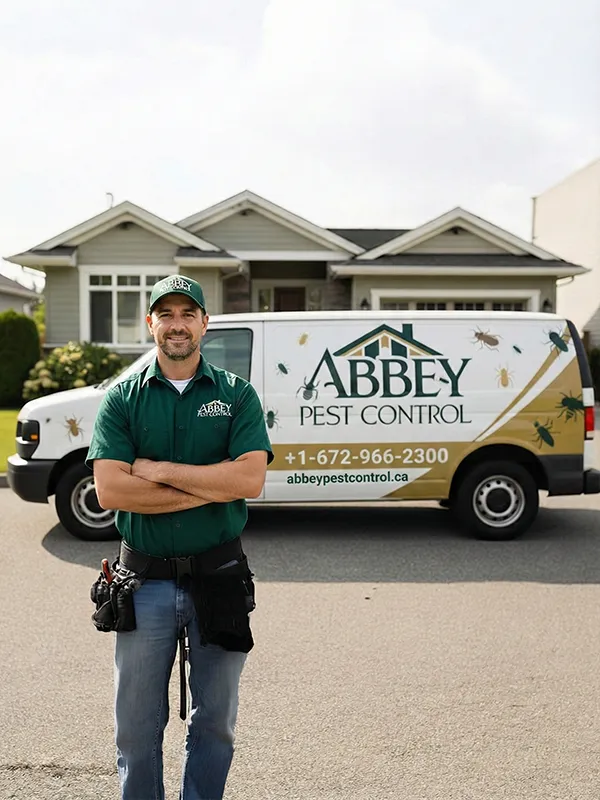
Abbey Pest Control professional providing services.
Client picture

A truly professional and reliable pest control service.

Client's Get

Always Exceptional

ABOUT US

Over a Decade of Safe, Reliable Pest Control Solutions Since 2010

At Abbey Pest Control, we've been safeguarding homes and businesses from pests for over a decade. Our team combines proven methods with the latest technology to deliver fast, effective, and long-lasting results. Whether it's insects, rodents, or seasonal invaders — we handle it all with precision and care. Count on us for pest control solutions that are safe for your family, pets, and the environment. Call Us Now!

Client picture

A truly professional and reliable pest control service.

smiling Client picture

Quick, efficient, and friendly. Highly recommended!

01

Our Mission

Years ago, Abbey Pest Control began when a local family faced a tough pest invasion threatening their home and loved ones. Driven to protect families safely and effectively, Abbey crafted eco-friendly, fast-acting pest solutions. Today, our mission is to safeguard homes and businesses in Abbotsford by delivering trusted, safe, and environmentally responsible pest control with unmatched customer care.

02

Our Vision

Abbey Pest Control envisions becoming the leading pest control company in British Columbia and beyond—known for innovative, eco-conscious methods and exceptional service. We aim to build lasting relationships rooted in trust and safety, ensuring every home and business enjoys a pest-free, healthy environment for generations to come.

OUR SERVICES

What We Do

We provide a wide range of pest control services to keep your home and business safe and pest-free.

Residential Pest Control

Comprehensive solutions for homes, including ants, spiders, rodents, and bed bugs.

Commercial Pest Control

Tailored pest management for offices, restaurants, hotels, and industrial properties.

Common Pest Extermination

Effective removal of cockroaches, wasps, fleas, ticks, and other common invaders.

Bed Bug Treatment

Specialized and thorough bed bug inspection and eradication services for your peace of mind.

Rodent

Humane removal of rats, mice, and other rodents.

Eco-Friendly & Prevention

Green pest control options and preventative treatments to keep pests away for good.

Termite Control

Protect your property from structural damage with our advanced termite solutions.

Inspection & Monitoring

Free pest inspections, real estate reports, and routine monitoring to ensure a pest-free environment.

IDENTIFY PEST

Know Your Enemy

Understanding the type of pest you're dealing with is the first step to effective control.
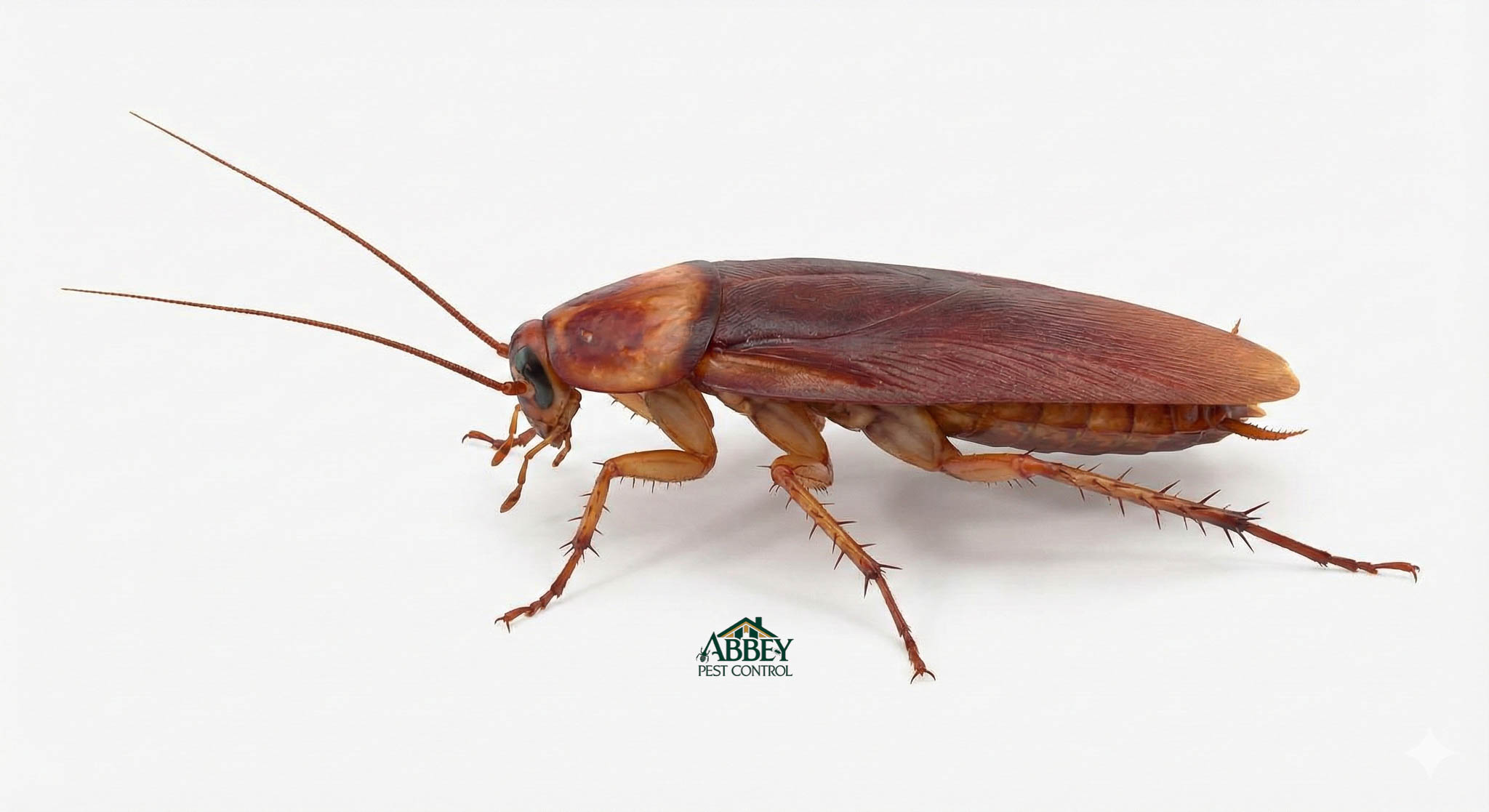
An American Cockroach.

American Cockroach

The American cockroach is the largest of the house-infesting roaches and is a major sign of sanitation issues. These pests can spread over 33 different kinds of bacteria, six parasitic worms, and at least seven other human pathogens. As they travel from sewers into your home, they contaminate food surfaces and utensils, posing a serious health risk to your family. Their presence often indicates a moisture problem that requires professional inspection to resolve permanently.

Fact: Despite their name, American cockroaches are actually native to Africa and were introduced to the Americas via ships in the 1600s.

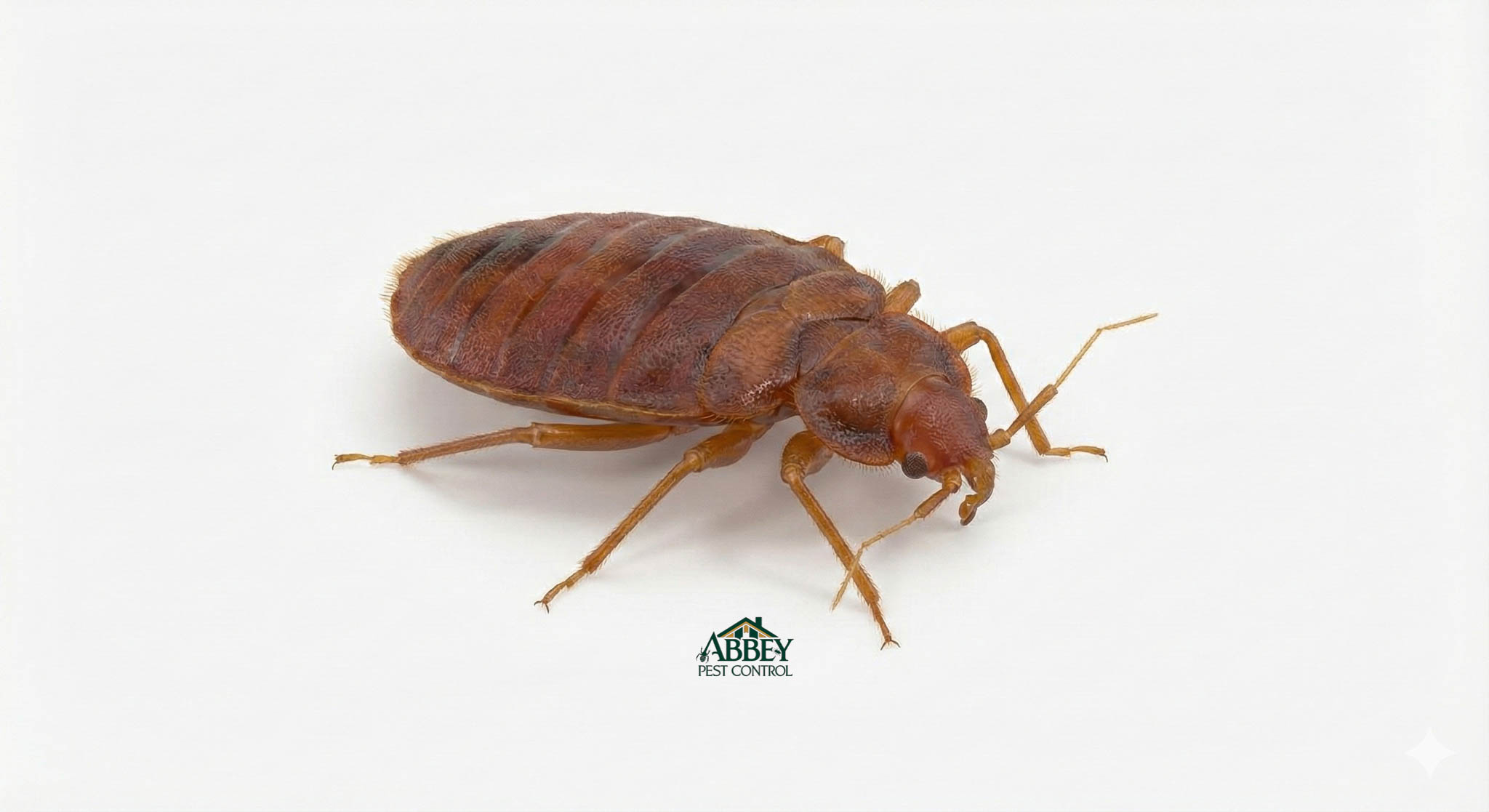
A close-up of a bed bug.

Bed Bug

Bed bugs are parasitic insects that feed exclusively on blood and are notoriously difficult to eliminate without professional heat or chemical treatments. A minor infestation can explode into a crisis in weeks, leading to sleepless nights, painful itchy welts, and significant psychological distress. They are expert hiders, tucking themselves into mattress seams, baseboards, and electrical outlets, making DIY treatments largely ineffective and often resulting in the infestation spreading to other rooms.

Fact: Bed bugs can survive for several months without feeding, waiting dormant in furniture until a host returns.

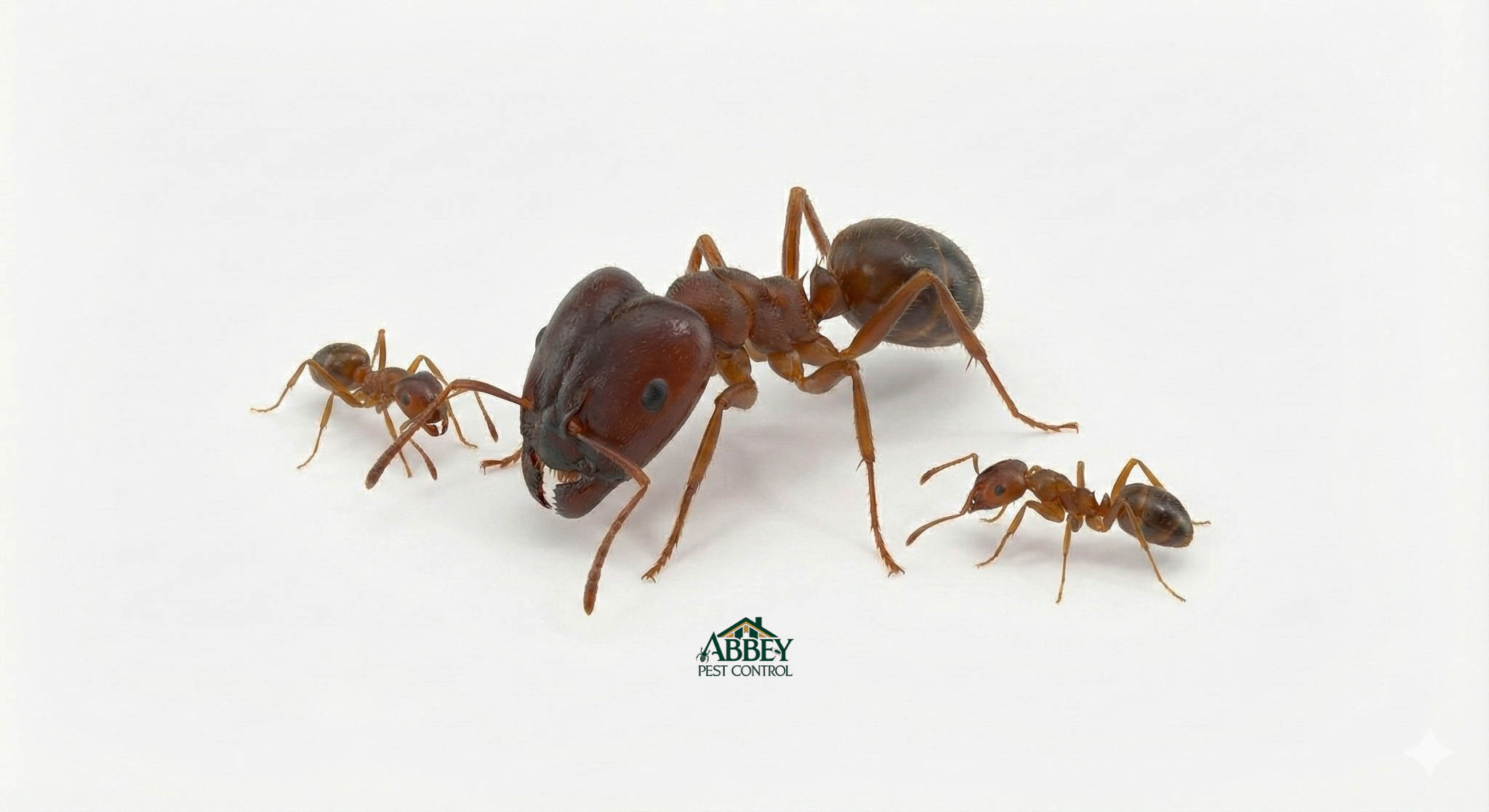
Big-headed ants.

Big-Headed Ants

Big-headed ants are invasive pests known for building "supercolonies" that can quickly overwhelm a property’s soil and pavement areas. While they rarely bite humans, they aggressively displace native ant species and can excavate significant amounts of soil, leading to ugly debris piles and potential damage to manicured lawns and patio foundations. When they forage indoors, they contaminate food sources and can be incredibly persistent, requiring specialized baiting strategies to eliminate the queens.

Fact: These ants are dimorphic, meaning they have two distinct worker sizes: minor workers and "major" soldiers with disproportionately large heads used to block tunnel entrances.

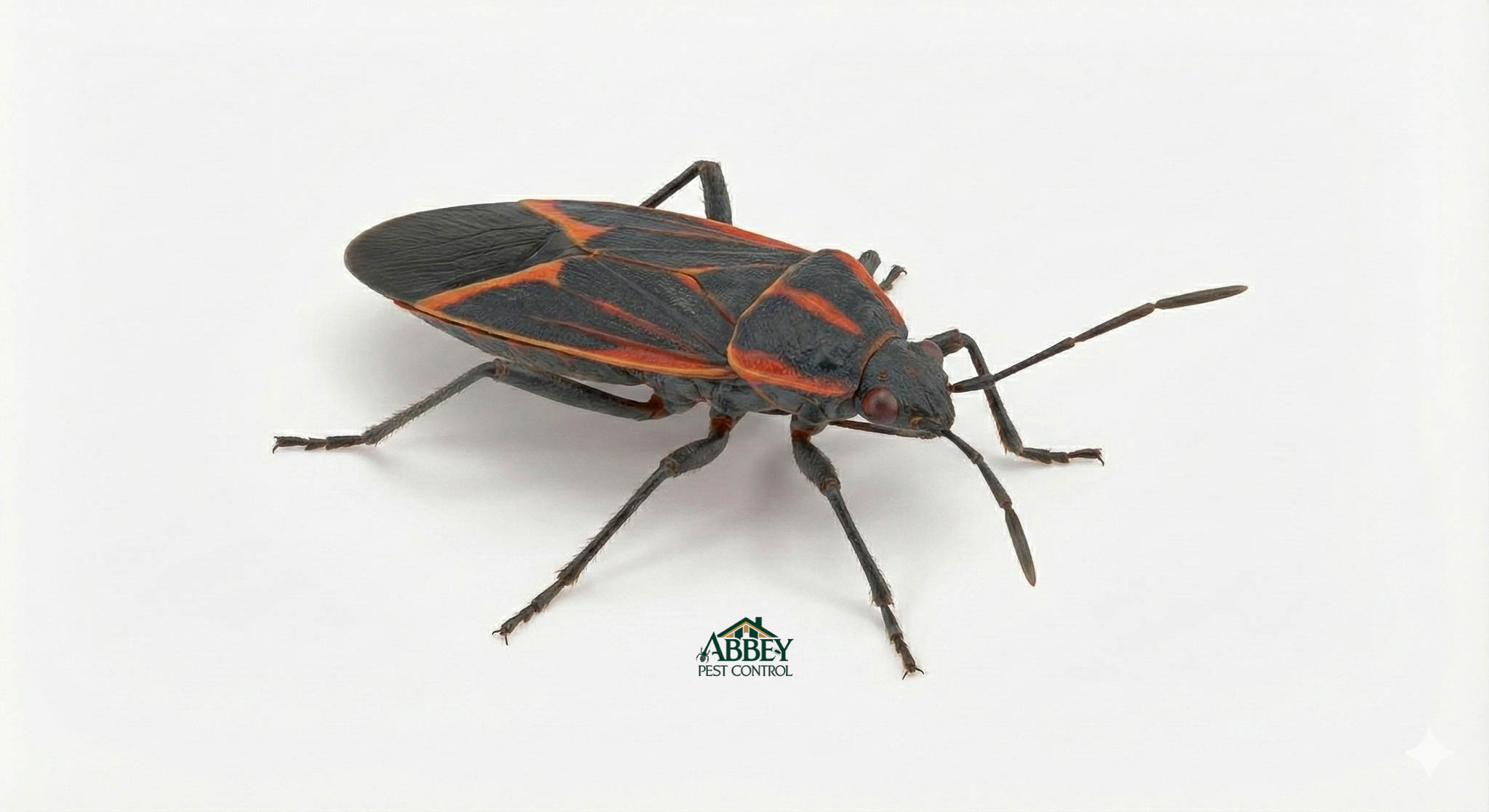
A boxelder bug.

Boxelder Bug

Boxelder bugs are nuisance pests that congregate in massive numbers on the sunny sides of homes during autumn, looking for a warm place to overwinter. While they do not bite, they can stain curtains, walls, and upholstery with their fecal matter if they manage to invade your living space. Their sheer numbers can be overwhelming and alarming to homeowners, and once they establish a harboring site inside your walls, they are difficult to remove without professional perimeter treatments.

Fact: Boxelder bugs are named after their primary food source, the seeds of the boxelder tree, though they will also feed on maple and ash trees.

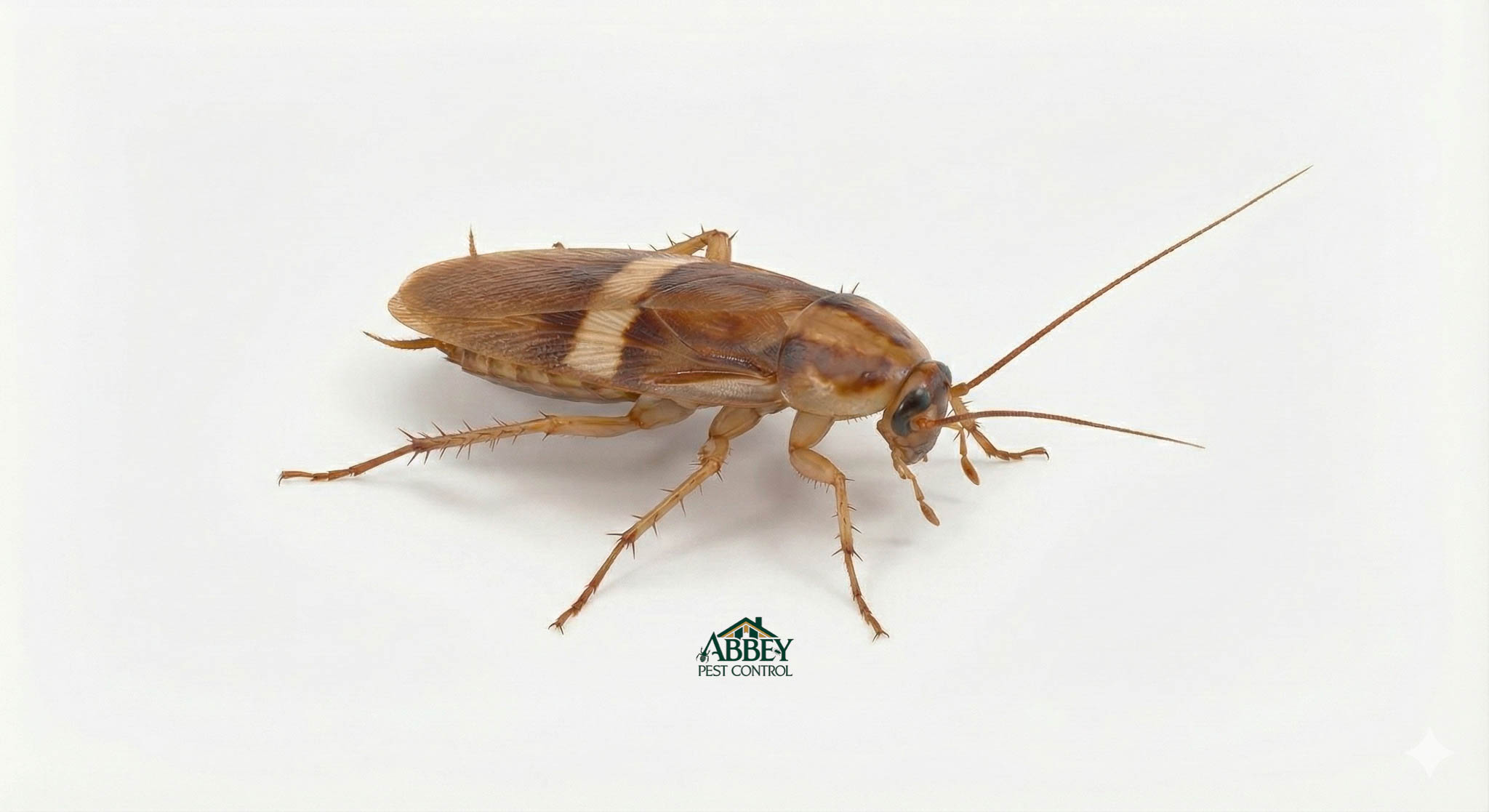
A brown-banded cockroach.

Brown-Banded Cockroach

Unlike other roaches that prefer damp areas, brown-banded cockroaches prefer warm, dry locations and are often found hiding in upper cabinets, behind picture frames, and inside electronics. This behavior makes them harder to detect and treat with standard floor-level baits, allowing populations to grow unnoticed. They carry harmful bacteria and allergens that can trigger asthma attacks, particularly in children, making immediate professional intervention necessary to protect indoor air quality.

Fact: The brown-banded cockroach gets its name from the two light brown bands that run across the wings of the adult and the body of the nymph.

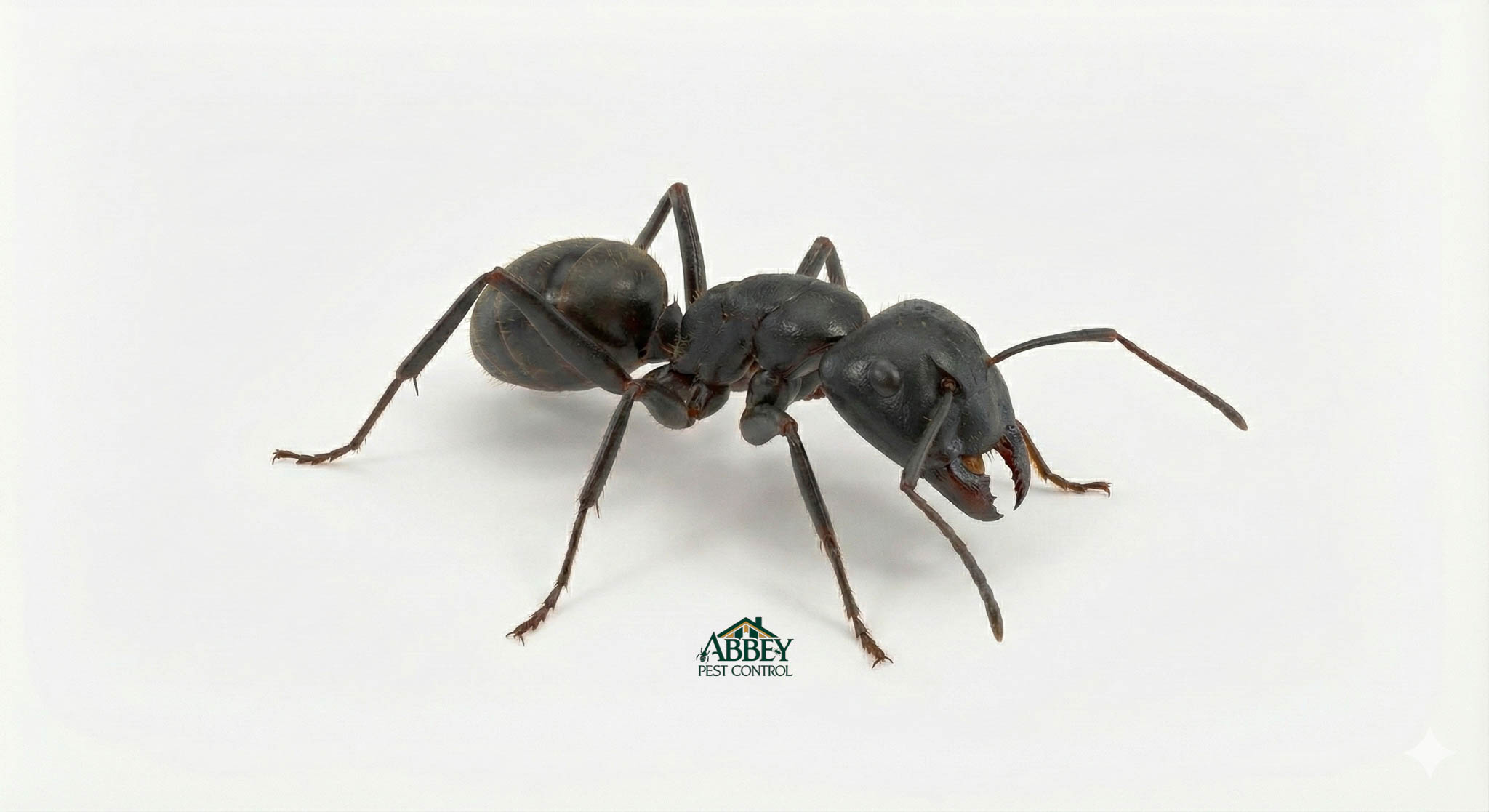
A carpenter ant.

Carpenter Ant

Carpenter ants are among the most destructive pests because they excavate wood to build their nests, often compromising the structural integrity of a building. They target moist or decaying wood but will readily tunnel into sound wood, potentially causing expensive damage to support beams, decks, and window frames before they are even noticed. Ignoring a few visible ants often allows a massive satellite colony to thrive inside your walls, necessitating a comprehensive structural defense plan.

Fact: Carpenter ants do not actually eat wood; they only chew through it to create galleries for their nests, leaving behind sawdust-like shavings called "frass."

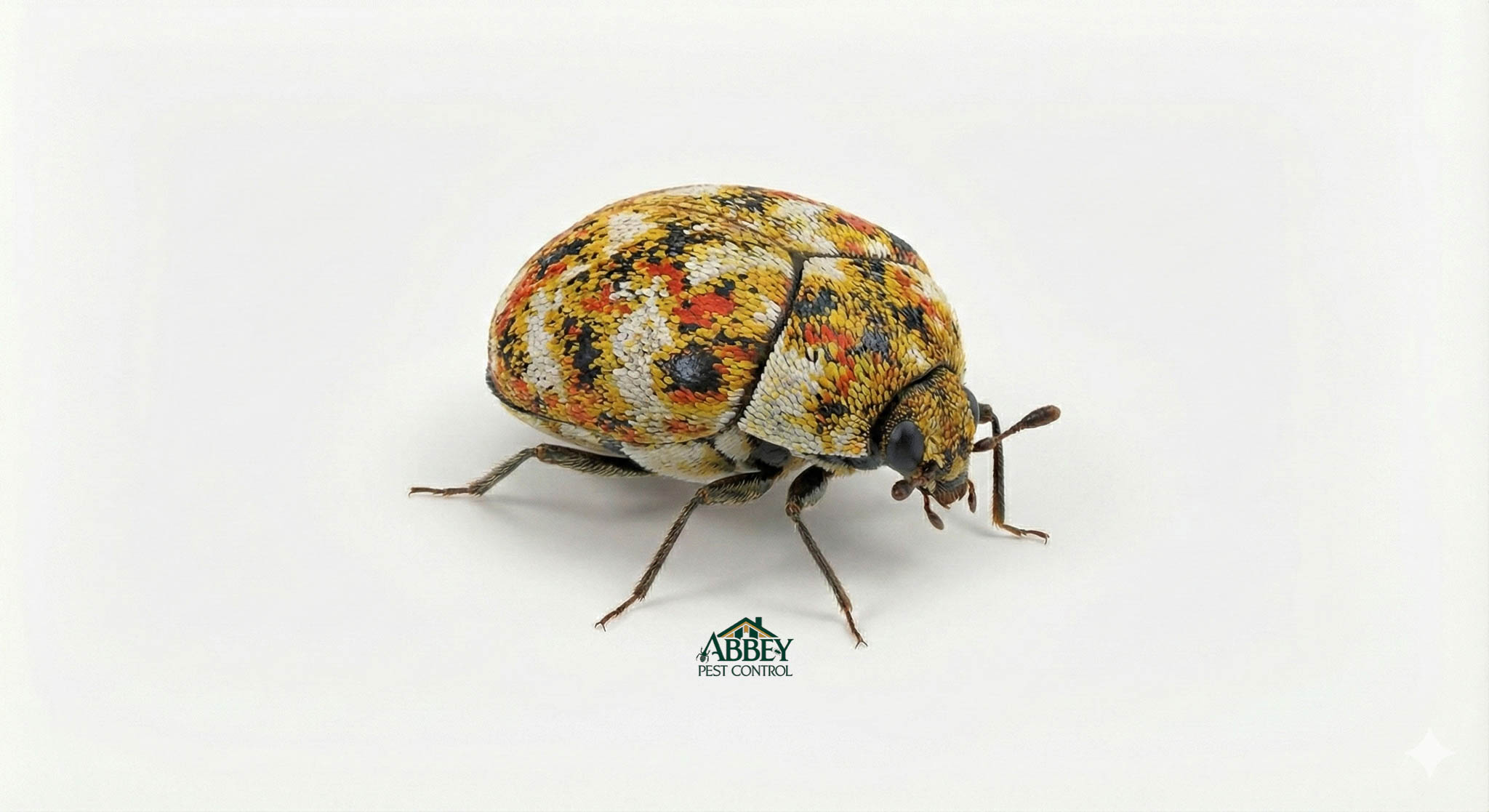
A carpet beetle.

Carpet Beetle

Carpet beetles are small, often overlooked pests that can cause irreparable damage to natural fibers in your home, including wool carpets, silk clothing, and leather furniture. The larvae are the destructive stage, feeding on keratin found in animal-based fabrics and even pet hair accumulation in vents and corners. Because they hide in dark, undisturbed areas like closets and under heavy furniture, infestations are often widespread before damage becomes visible on your valuable textiles.

Fact: Adult carpet beetles primarily feed on pollen and nectar outdoors; it is only the larvae that feed on fabrics inside the home.

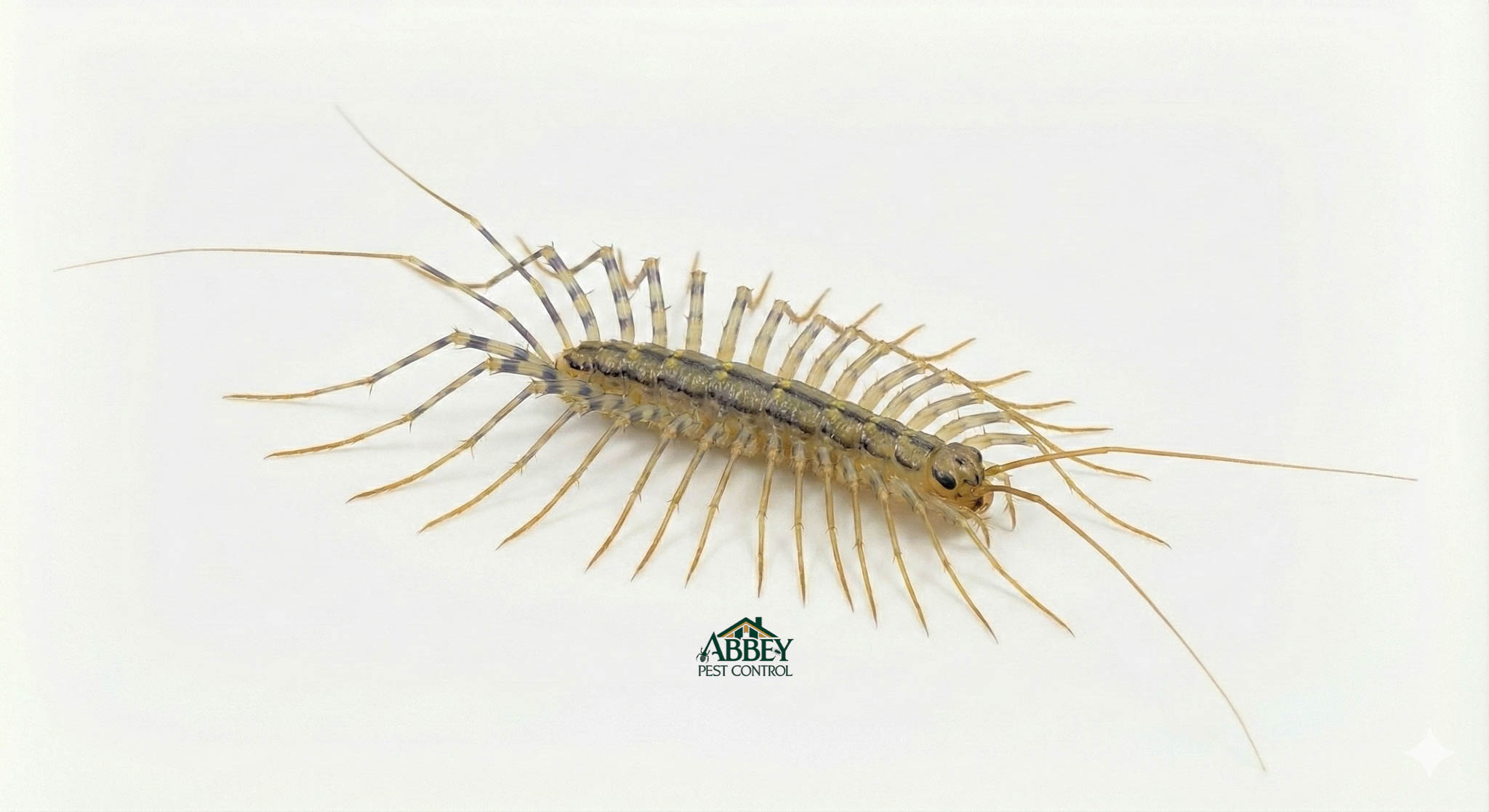
A centipede.

Centipede

House centipedes are startling, multi-legged arthropods that thrive in damp basements and bathrooms, moving with terrifying speed. While they prey on other insects, their presence indicates high moisture levels and a potential underlying infestation of other pests that they are feeding on. For many homeowners, the sight of these large, creepy-crawlers is intolerable, and their venomous bite, though rare, can cause localized pain similar to a bee sting.

Fact: Centipedes can have anywhere from 15 to 177 pairs of legs, but they always have an odd number of pairs.

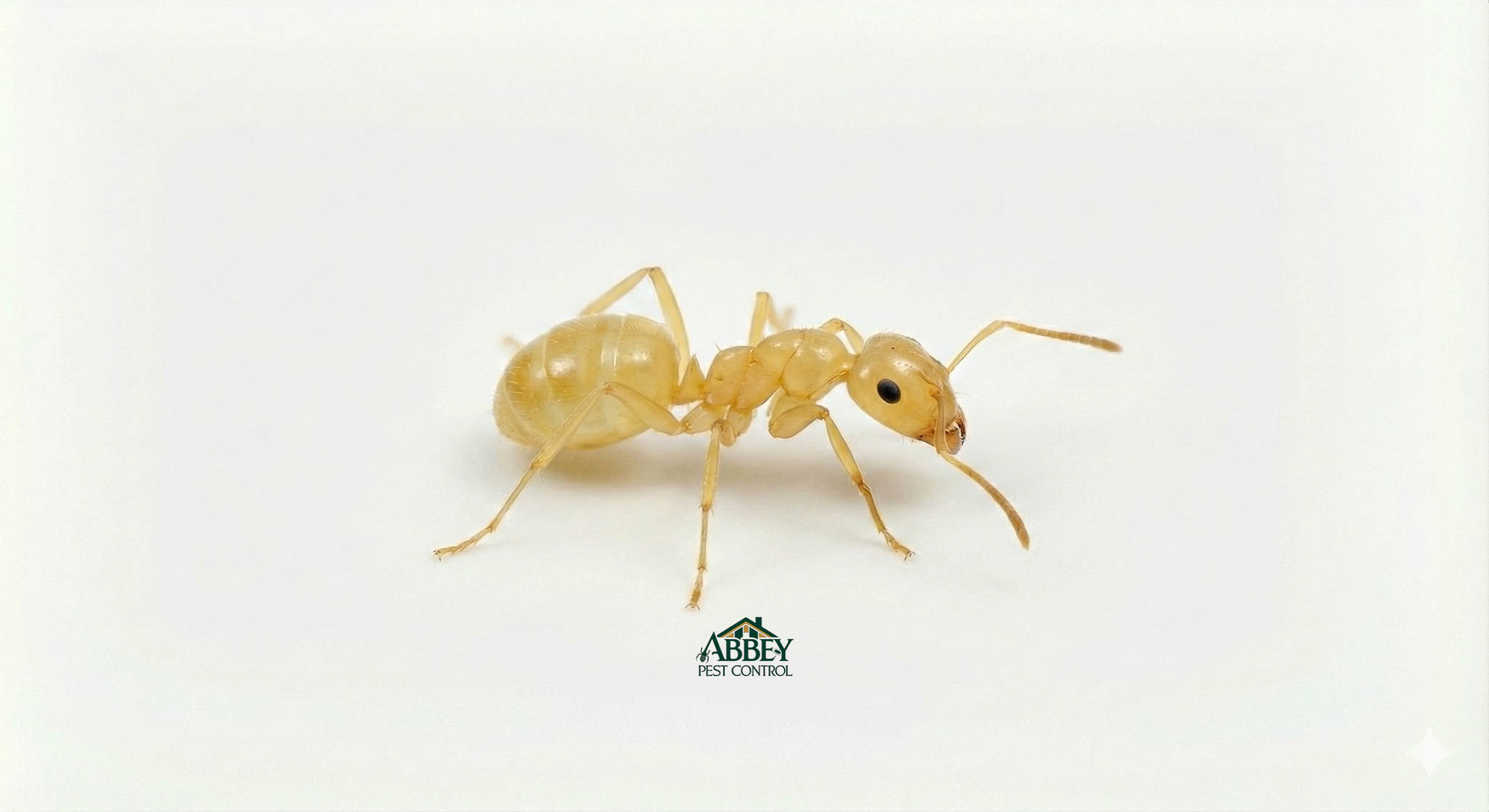
A citronella ant.

Citronella Ant

Citronella ants are yellow subterranean ants that are often confused with termites due to their swarming behavior near foundations. While they are not structurally destructive like carpenter ants, they create large soil mounds that can disrupt patios and invade basements or crawlspaces in search of moisture. Their presence indoors is often a nuisance during swarming season, and identifying their entry points requires a trained eye to prevent recurring invasions.

Fact: These ants emit a distinct lemon or citronella odor when crushed or threatened, which acts as a defense mechanism.

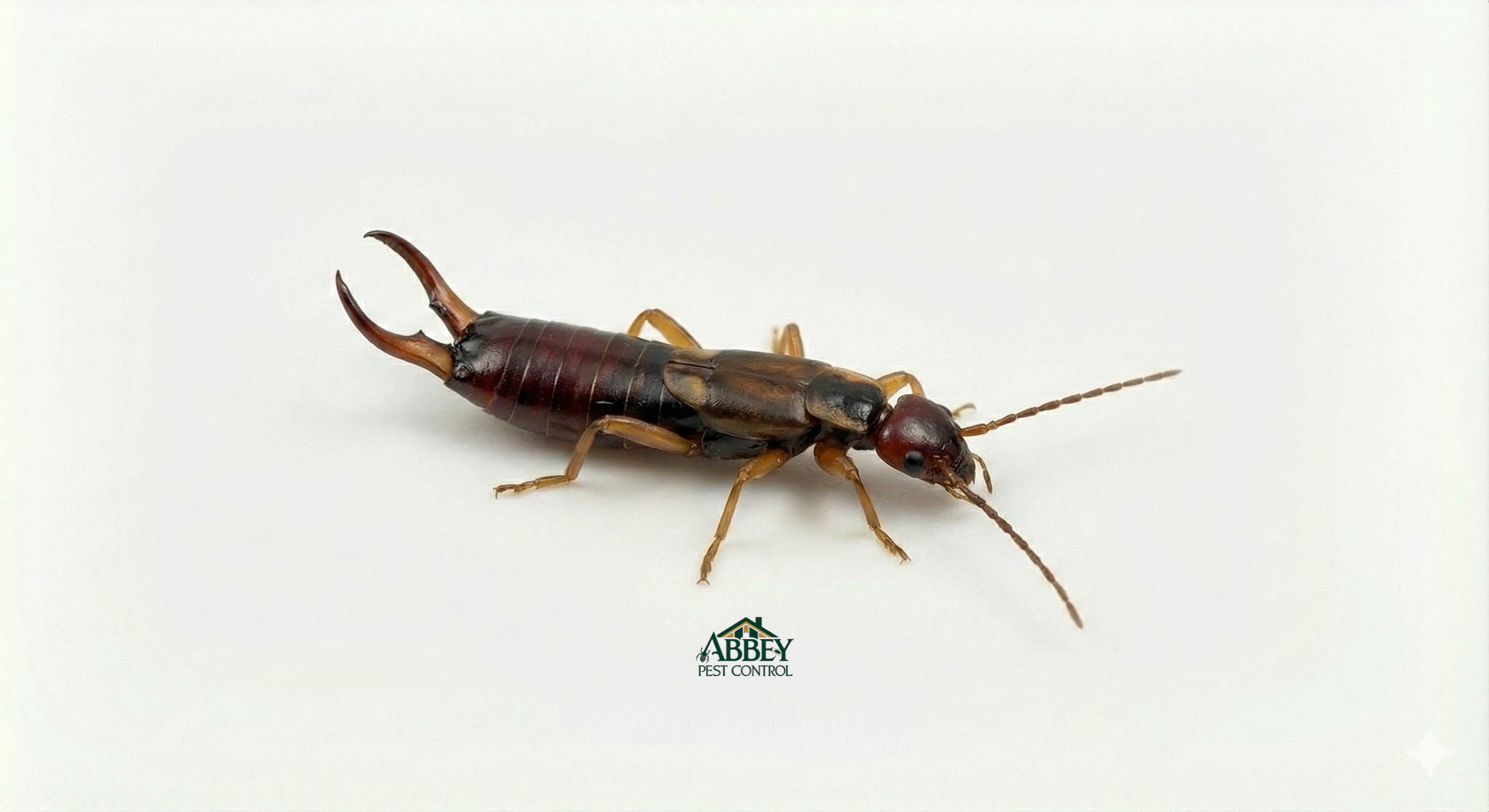
An earwig.

Earwig

Earwigs are frightening-looking insects equipped with pincer-like cerci on their abdomen, often found clustering in damp areas near building foundations. They frequently migrate indoors during hot, dry weather or heavy rain, contaminating food supplies and hiding in laundry or bedding. While the myth that they crawl into ears is false, their presence in high numbers suggests moisture issues around your home's perimeter that need to be addressed to prevent them from establishing nests inside.

Fact: Female earwigs are among the few non-social insects that show maternal care, actively guarding their eggs and keeping them clean until they hatch.

A European fire ant.

European Fire Ant

The European Fire Ant is an aggressive invasive species that infests gardens and lawns, making outdoor spaces unusable for pets and children. Their sting is painful and causes a burning sensation; unlike other ants, they will swarm and sting repeatedly if their nests are disturbed. Because they form high-density colonies with multiple queens, DIY treatments often cause the colony to fracture and spread, making professional treatment essential for reclaiming your yard.

Fact: Unlike native ants that build visible mounds, European Fire Ants often nest in cryptic places like under rocks, logs, or in decaying wood, making them hard to spot until stepped on.

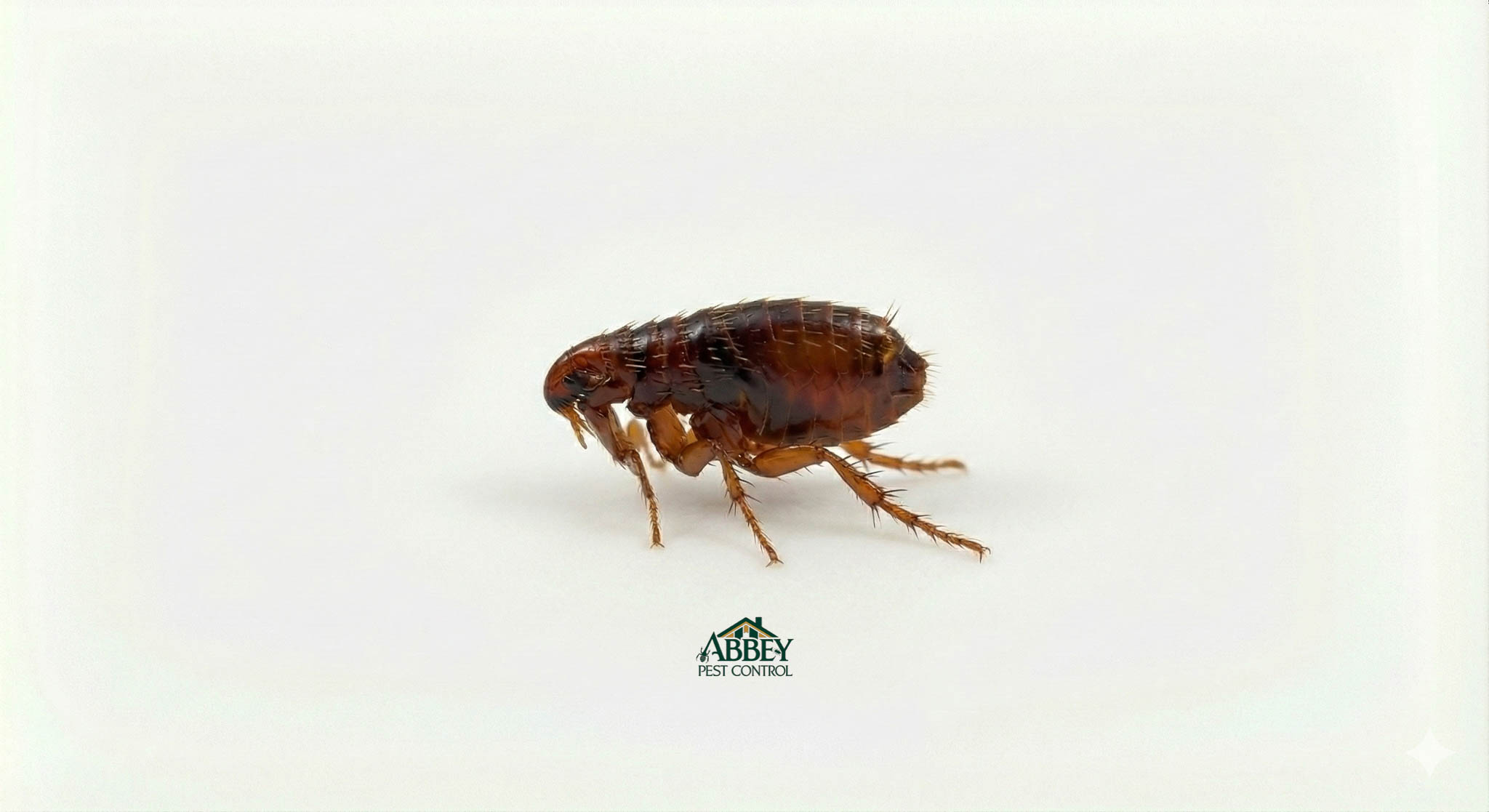
A flea.

Flea

Fleas are persistent external parasites that thrive on the blood of pets and humans, capable of infesting an entire home in a matter of days. Their bites cause intense itching and allergic reactions, and they are vectors for tapeworms and other diseases that affect both animals and people. Because their pupal stage is resistant to most household insecticides, professional treatment is usually required to break the life cycle and stop the constant re-emergence of biting adults.

Fact: A flea can jump up to 7 inches vertically and 13 inches horizontally—roughly 200 times its own body length.

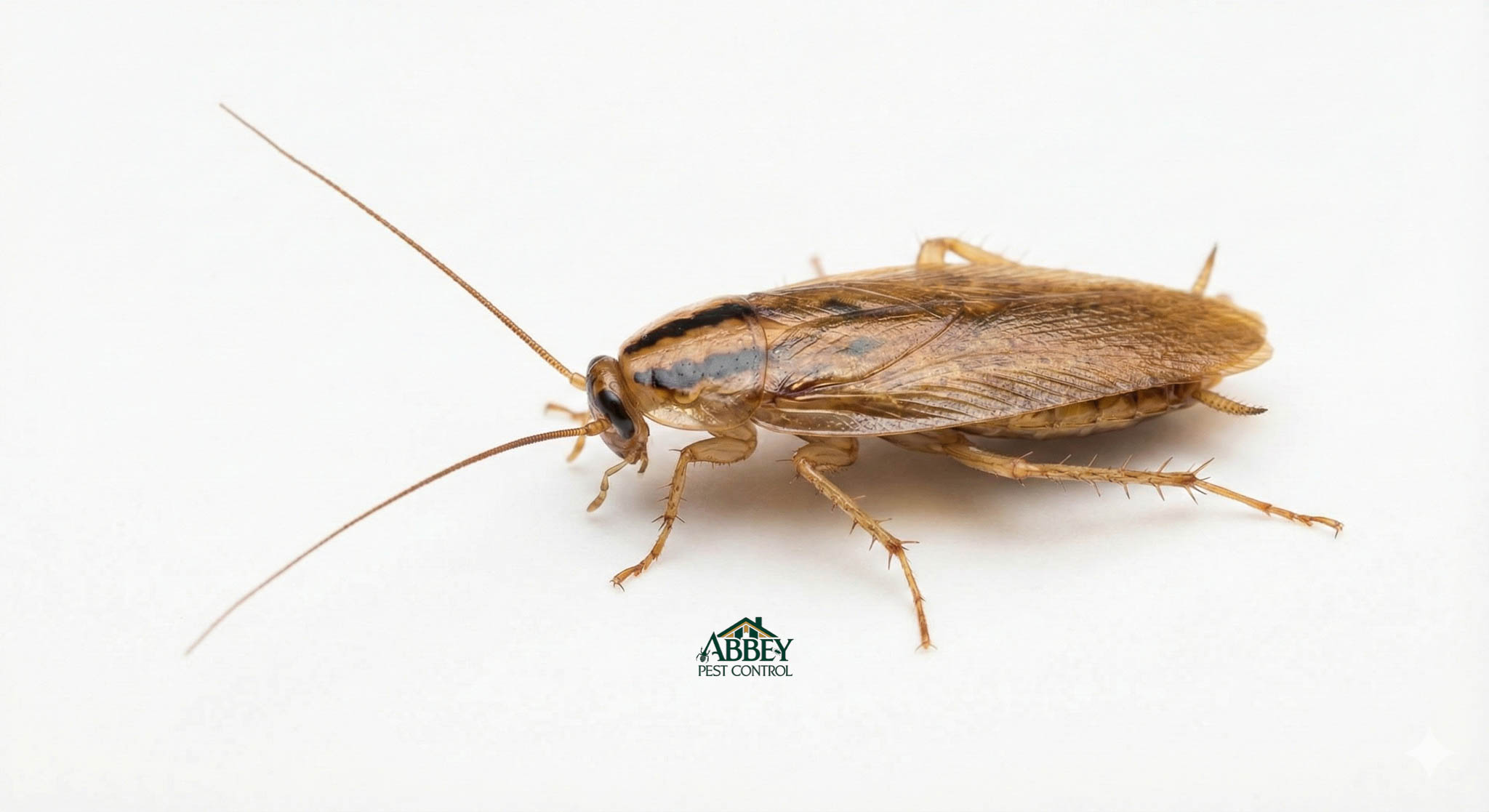
A German cockroach.

German Cockroach

The German cockroach is the most common and difficult-to-control roach species, known for its rapid reproduction rate and resistance to many store-bought pesticides. They gravitate toward kitchens and bathrooms, contaminating food preparation areas with pathogens like Salmonella and E. coli. An infestation can ruin specialized appliances where they like to hide (like dishwashers and microwaves) and significantly degrades the sanitary conditions of your home, requiring a multi-step professional baiting strategy.

Fact: A single female German cockroach and her offspring can theoretically produce more than 30,000 descendants in a single year.

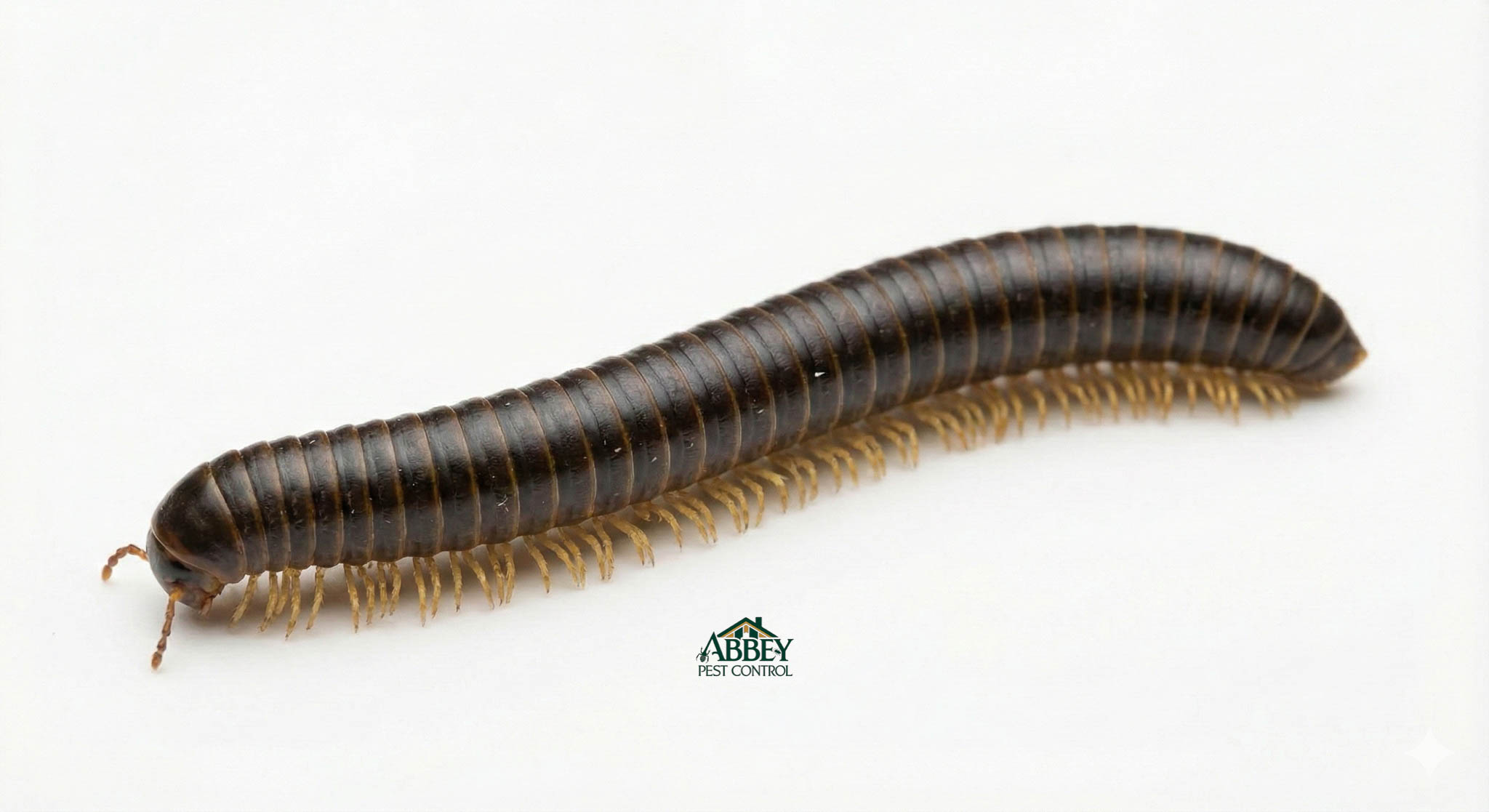
A millipede.

Millipede

Millipedes are moisture-loving scavengers that often migrate into homes in massive numbers after heavy rains or during droughts. While they do not bite or cause structural damage, they can stain floors and walls with a foul-smelling fluid when crushed or disturbed. A millipede invasion is a strong indicator of dampness issues in your basement or crawlspace, and barrier treatments are necessary to stop the endless march of these pests into your living areas.

Fact: Despite the name "millipede" meaning "thousand feet," no known species has 1,000 legs; the record holder has 750.

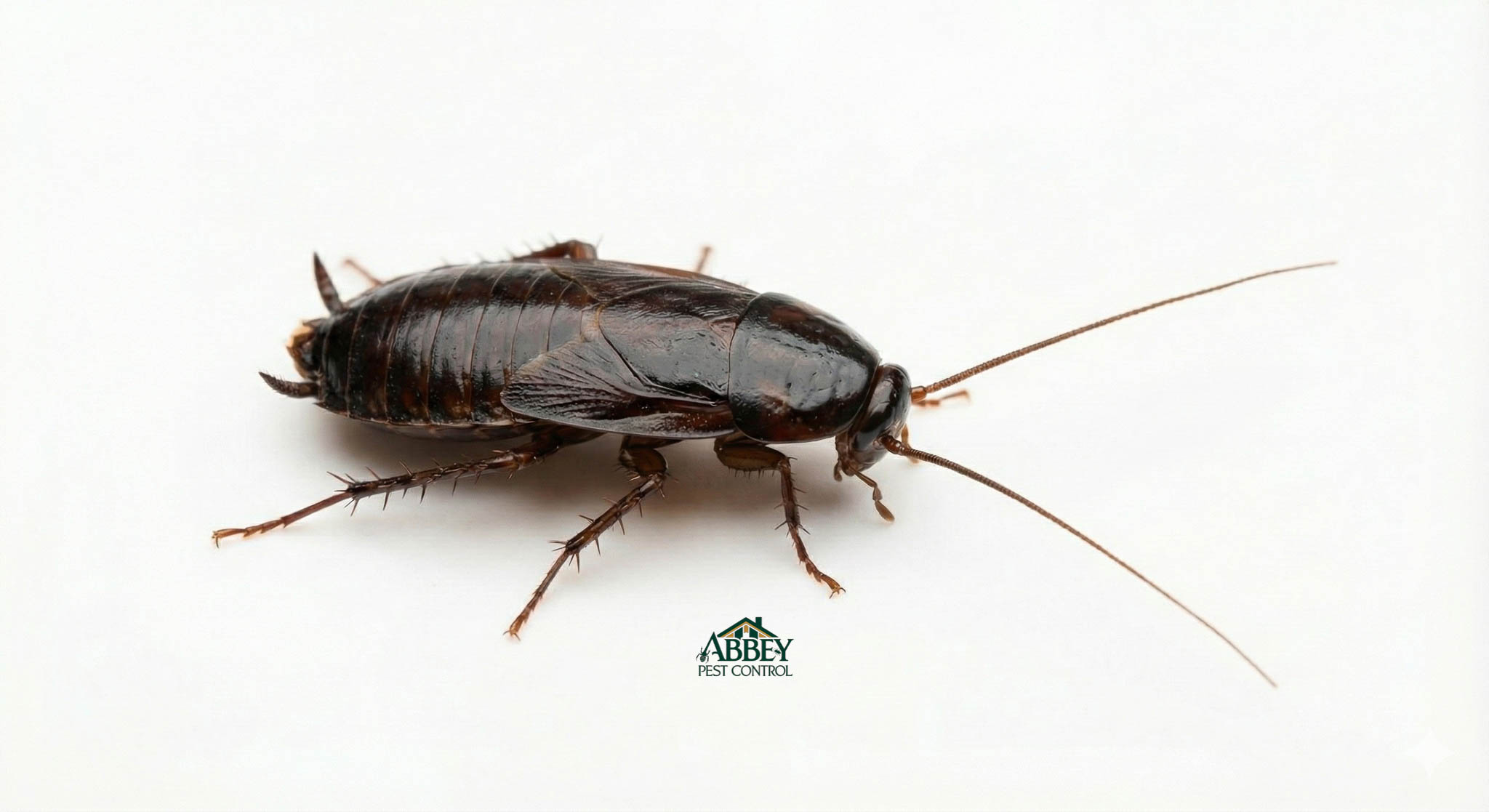
An oriental cockroach.

Oriental Cockroach

Often called "water bugs," Oriental cockroaches are filthy pests that enter homes through drains, sewers, and gaps in foundations. They feed on decaying organic matter and garbage, carrying dangerous bacteria from sewage directly onto your floors and counters. Because they rely heavily on water, they are commonly found in basements and crawlspaces, signaling serious sanitation or plumbing leaks that must be addressed alongside chemical treatment.

Fact: Unlike other common household roaches, Oriental cockroaches cannot fly and are noticeably slower moving.

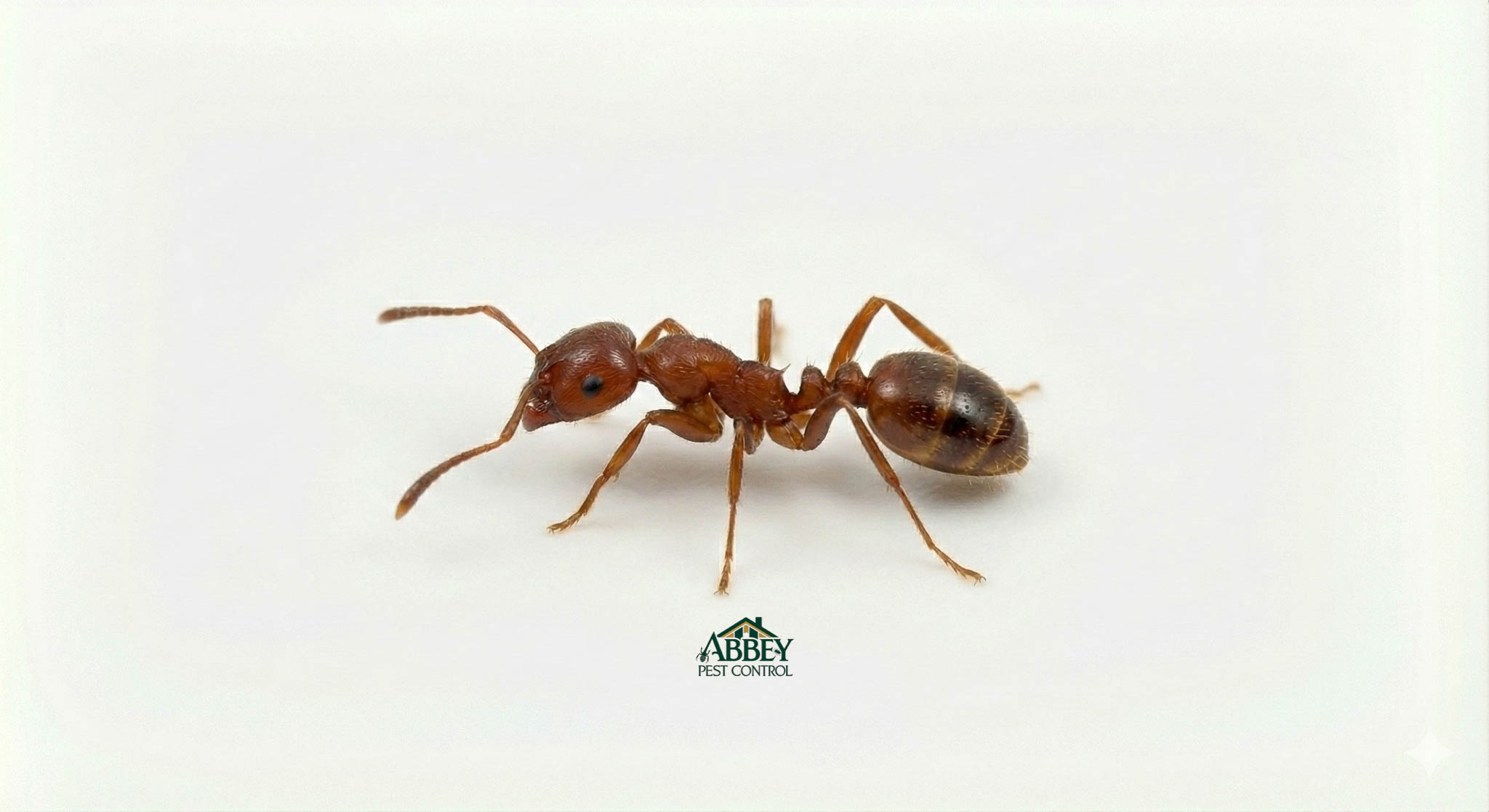
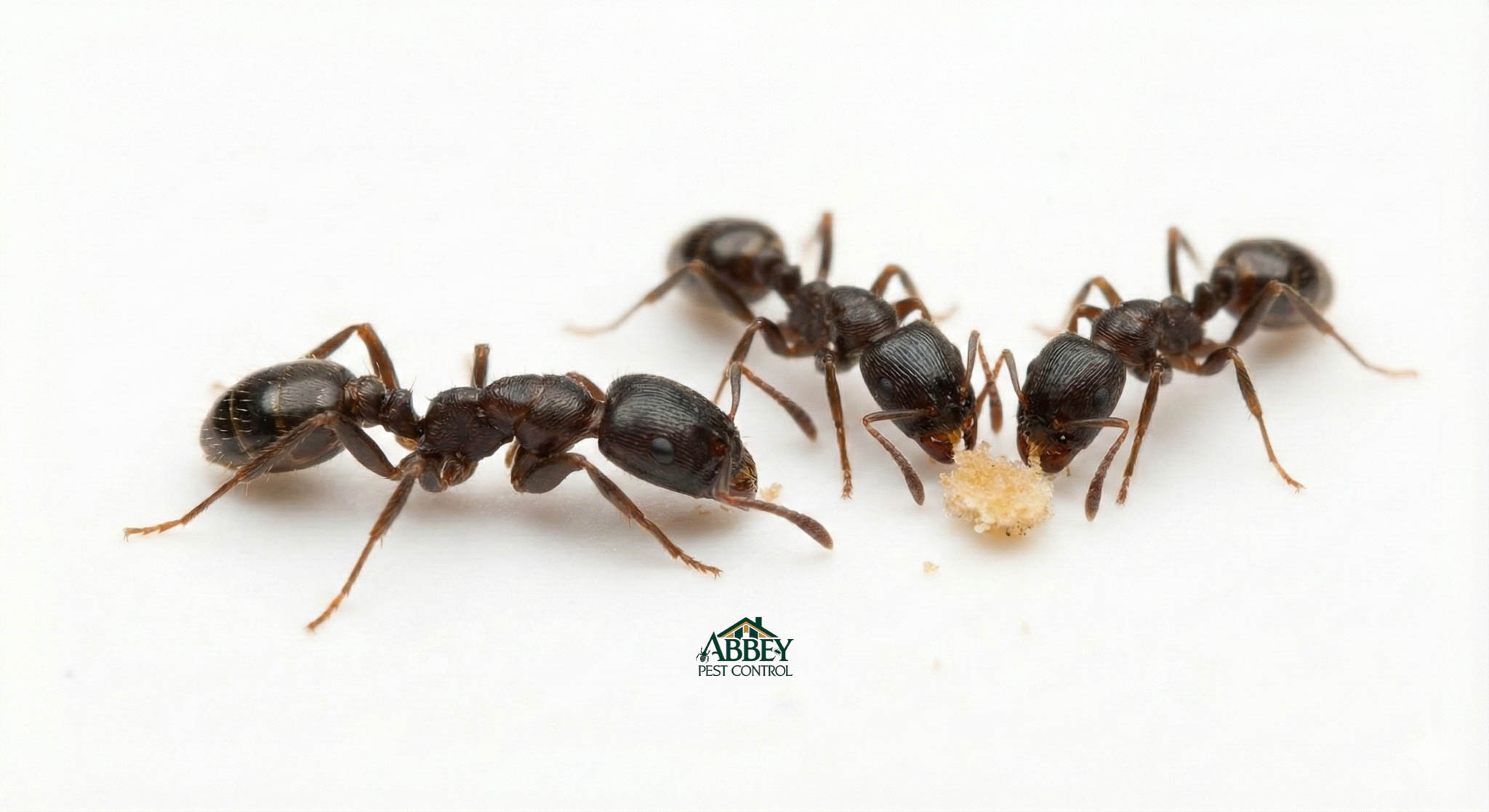
A pavement ant.

Pavement Ant

Pavement ants are one of the most common household invaders, nesting in cracks in driveways and foundations and entering homes in search of sweet or greasy foods. They can quickly overrun kitchens and pantries, contaminating food sources with their trailing behavior. While they may seem harmless, their colonies are vast and difficult to reach, often requiring professional drilling and treating of slabs or perimeter baits to stop them from returning season after season.

Fact: Pavement ants will engage in massive wars with neighboring colonies to expand their territory, often seen as large battles on sidewalks in spring.

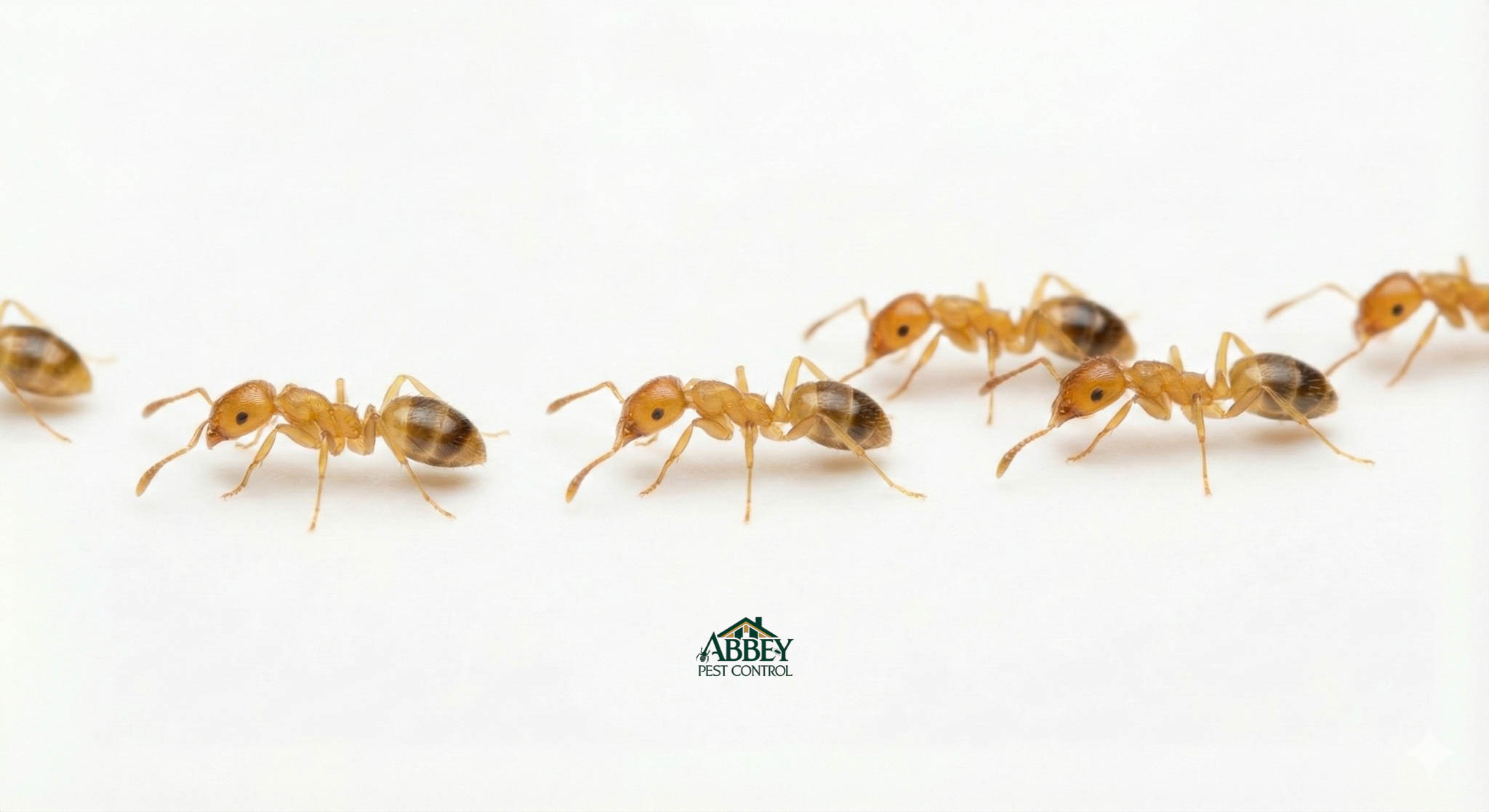
A pharaoh ant.

Pharaoh Ant

Pharaoh ants are notoriously difficult to control because they have multiple queens and will "bud" or split into new colonies if sprayed with repellent pesticides. This makes DIY attempts dangerous, as spraying often spreads the infestation throughout the entire building rather than killing it. They are a serious health hazard, known to invade sterile environments and even gnaw on the skin of sleeping infants or patients, making professional baiting the only viable solution.

Fact: Pharaoh ants are tropical insects that cannot survive outdoors in freezing climates, relying entirely on artificial heating inside buildings to survive winter.

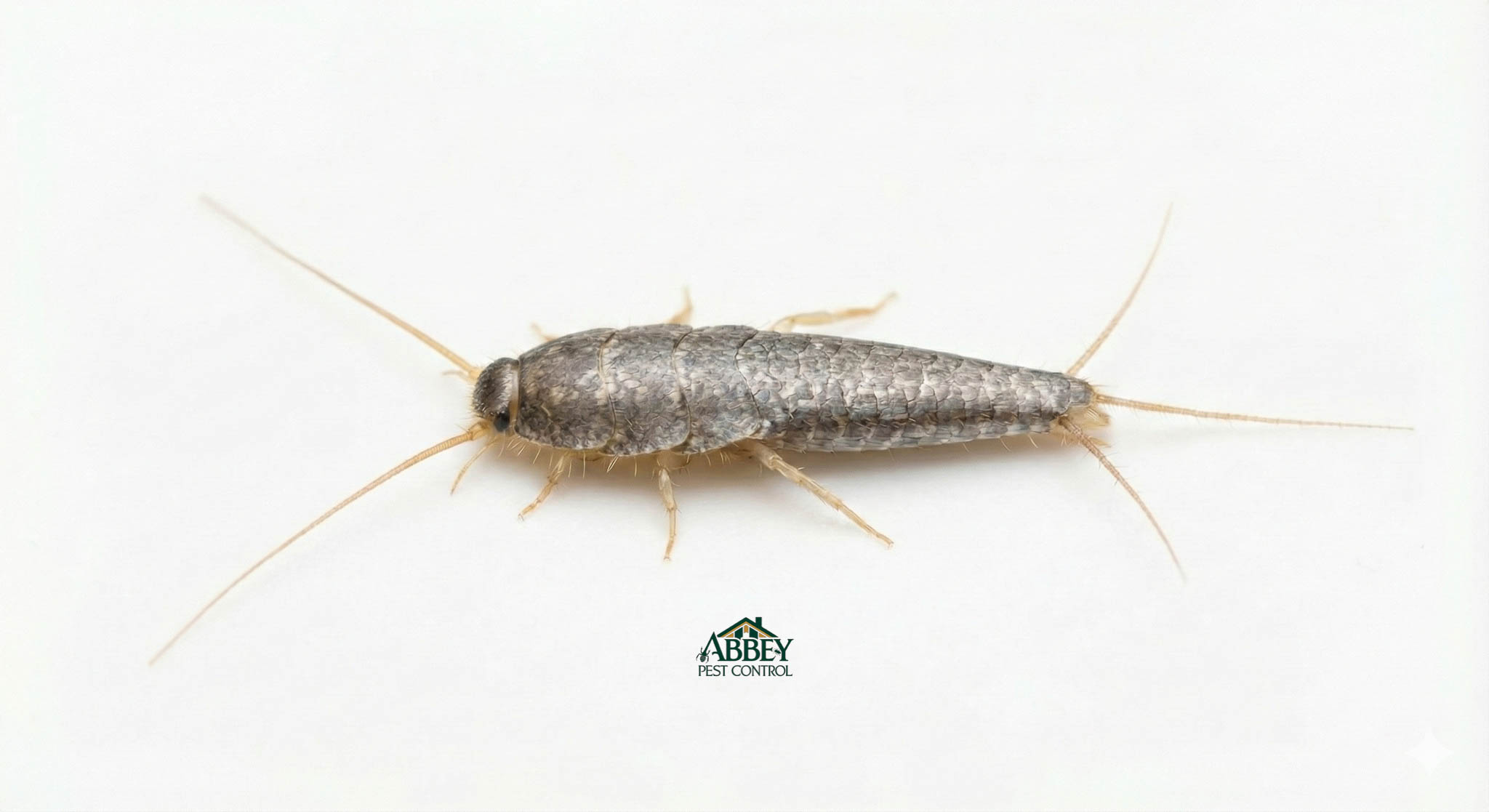
A silverfish.

Silverfish

Silverfish are primitive, nocturnal insects that feed on carbohydrates, putting your books, wallpapers, and important documents at risk of destruction. They thrive in high-humidity environments like attics and bathrooms, often going unnoticed until their population is large and damage is done. Their feeding habits can ruin expensive clothing and pantry items, and their presence suggests a humidity control problem that needs to be managed to prevent long-term infestation.

Fact: Silverfish are known for their prehistoric appearance and can live for up to eight years, molting throughout their entire lives.

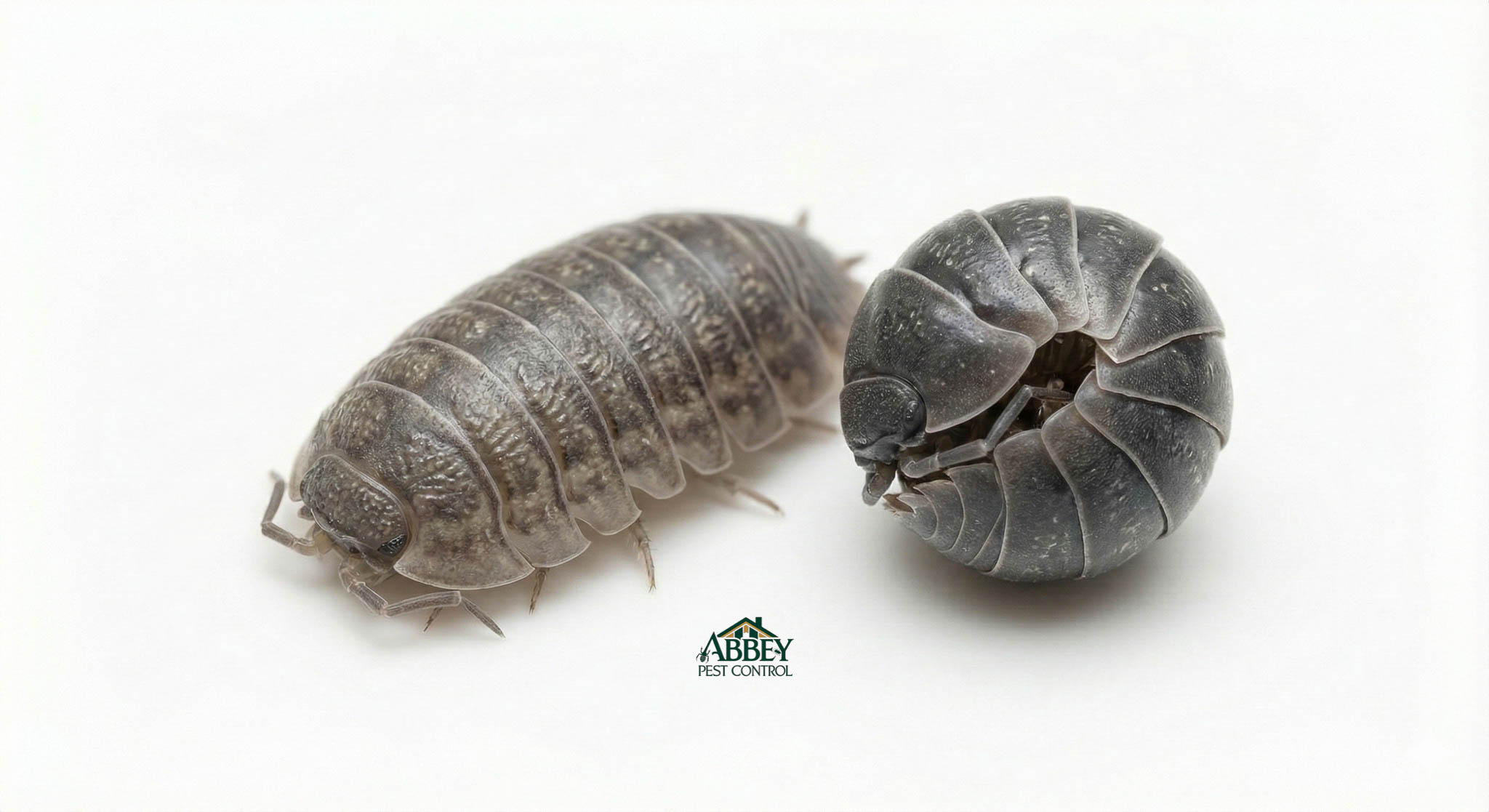
A sowbug or pillbug.

Sowbug and Pillbug

Sowbugs and Pillbugs (Roly-Polies) are land-dwelling crustaceans that require high moisture to survive, often clustering in damp basements and crawlspaces. While they do not bite or spread disease, their presence in the home is a clear warning sign of water intrusion or rotting wood thresholds. Large numbers of them indoors can be unsightly and messy, requiring exclusion techniques and moisture reduction to keep your home pest-free.

Fact: The key difference between them is that a Pillbug can roll into a tight ball when threatened (conglobation), while a Sowbug cannot.

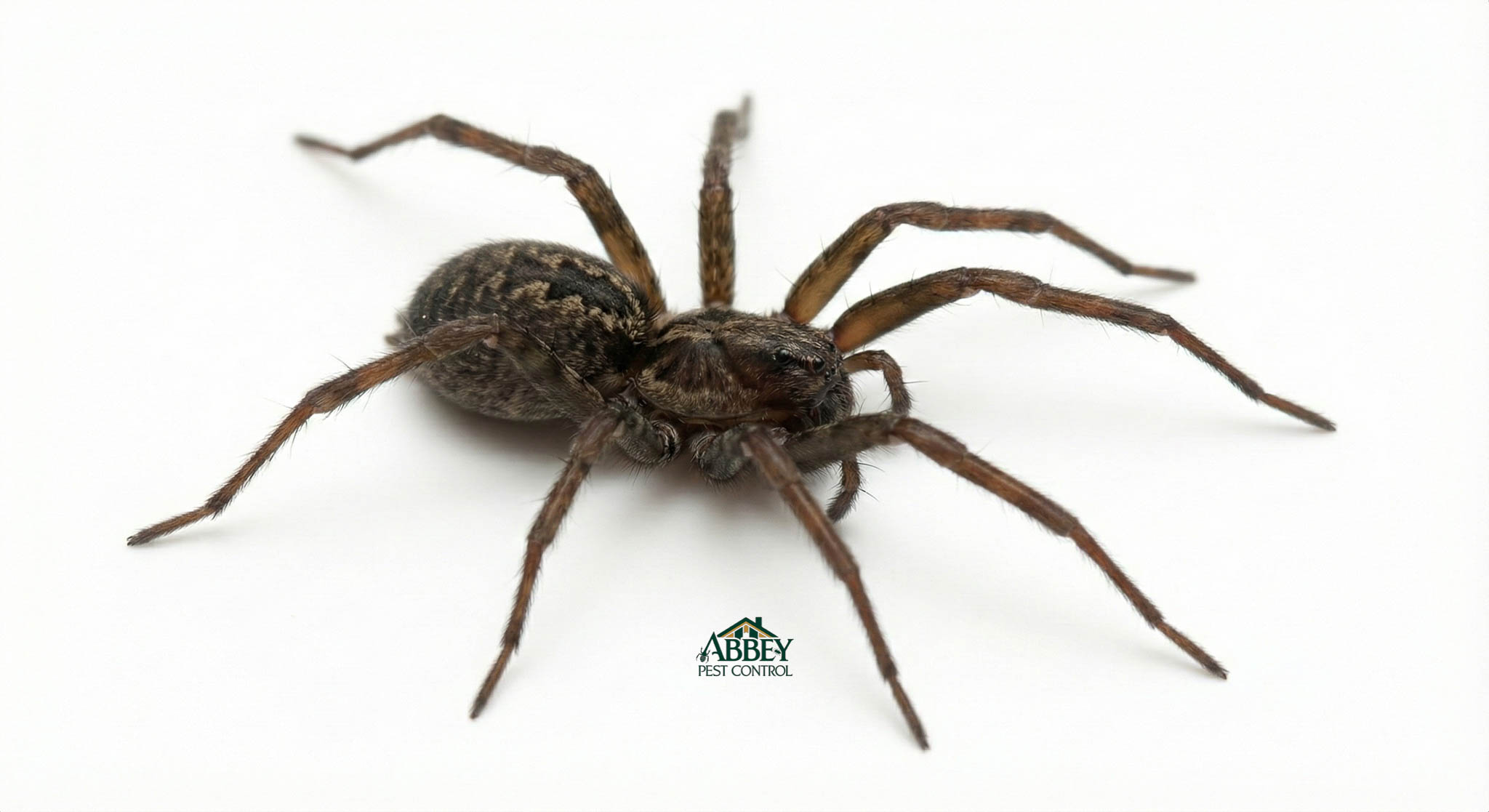
A spider.

Spider

While most house spiders are harmless, their webs create unsightly messes, and the presence of predatory spiders indicates a thriving population of other insects in your home. Certain species, such as the Black Widow or Brown Recluse, pose serious medical threats with venomous bites that require immediate medical attention. Professional spider control not only removes the webs and spiders but addresses the food source—the other bugs—that is attracting them to your property.

Fact: Spider silk is incredibly strong; on a weight-for-weight basis, it is stronger than steel and tougher than Kevlar.

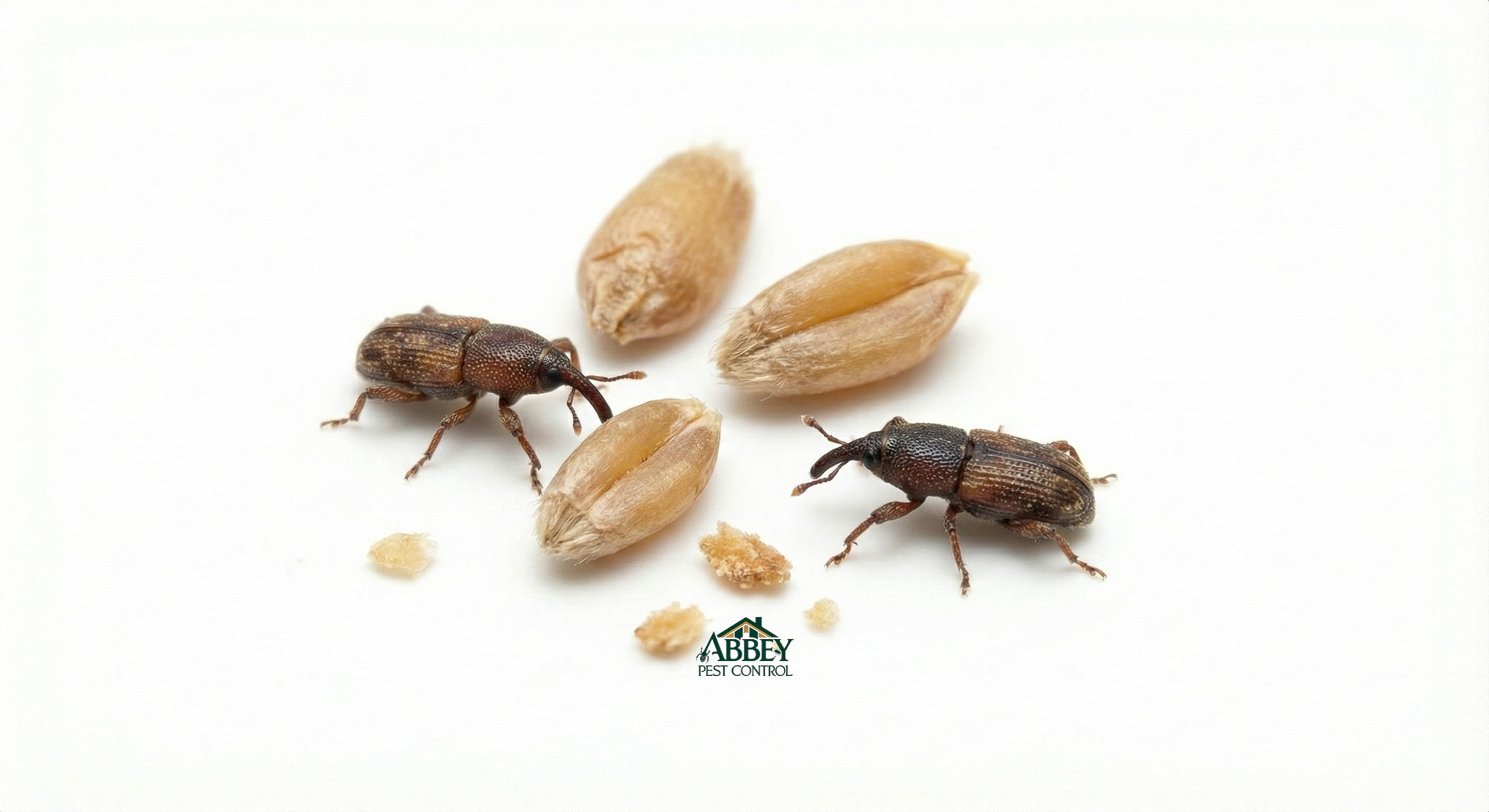
Stored product pests.

Stored Product Pests

Stored product pests, such as weevils and flour beetles, infest pantries and contaminate grains, spices, cereals, and dried fruits. These pests can chew through paper and plastic packaging, rendering hundreds of dollars of groceries inedible and unhygienic. Once established, they are difficult to fully eradicate without identifying and removing the source, followed by a detailed crack-and-crevice treatment to kill hidden eggs and larvae.

Fact: Many stored product infestations originate at the grocery store or processing plant, entering your home already inside the sealed packaging.

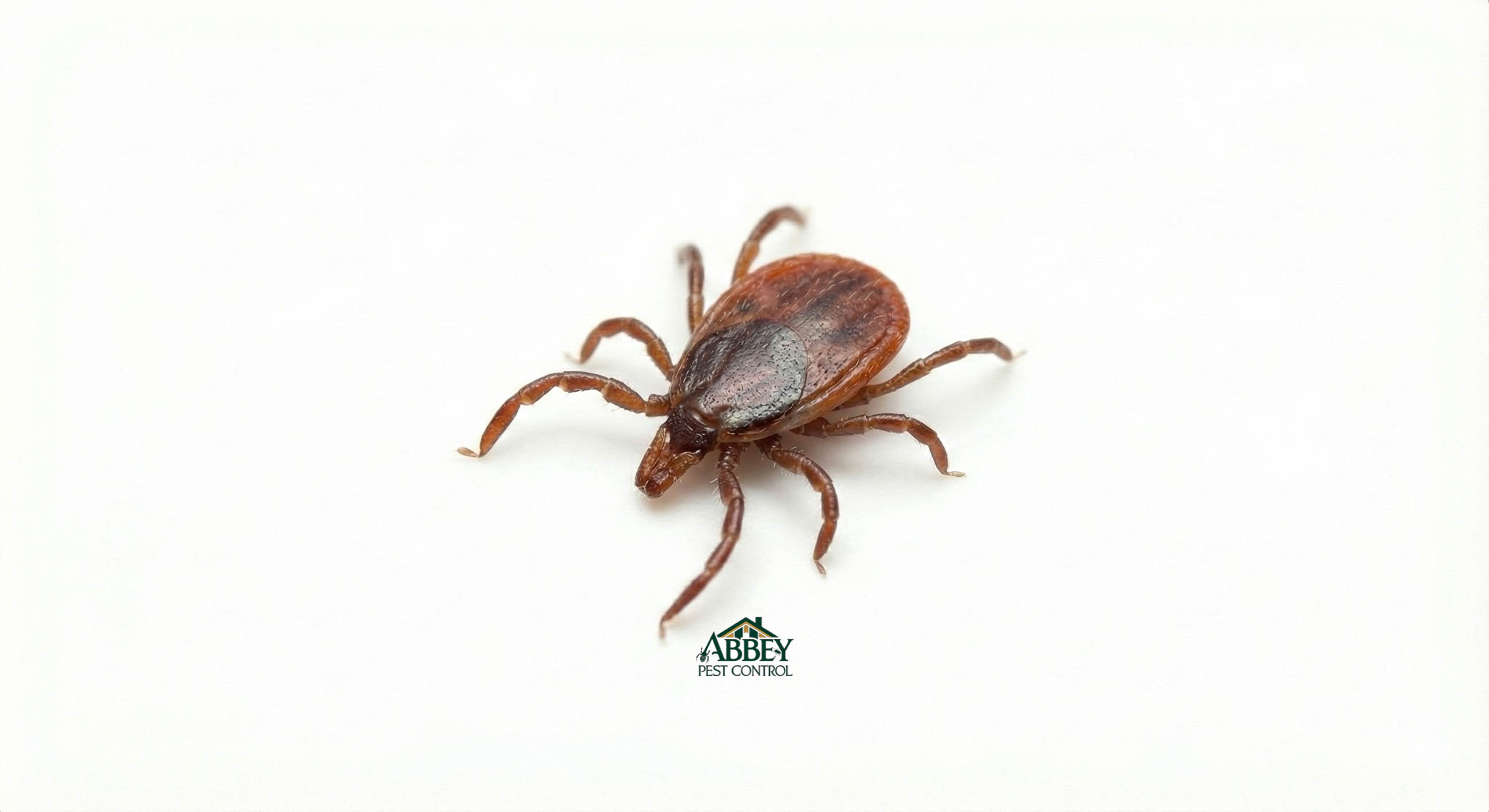
A tick.

Tick

Ticks are dangerous vectors for severe illnesses, including Lyme disease and Rocky Mountain spotted fever, posing a high risk to both your family and pets. They hide in tall grass and shrubs around your yard, waiting to latch onto passing hosts to feed on blood. Because tick bites are often painless and the pests are small, they can go unnoticed for days while transmitting pathogens, making professional yard treatments essential for a safe outdoor environment.

Fact: Ticks are arachnids, meaning they are more closely related to spiders and scorpions than to insects.

LATEST BLOGS

News & Articles

Stay informed with latest articles, tips, and news from the world of pest control.
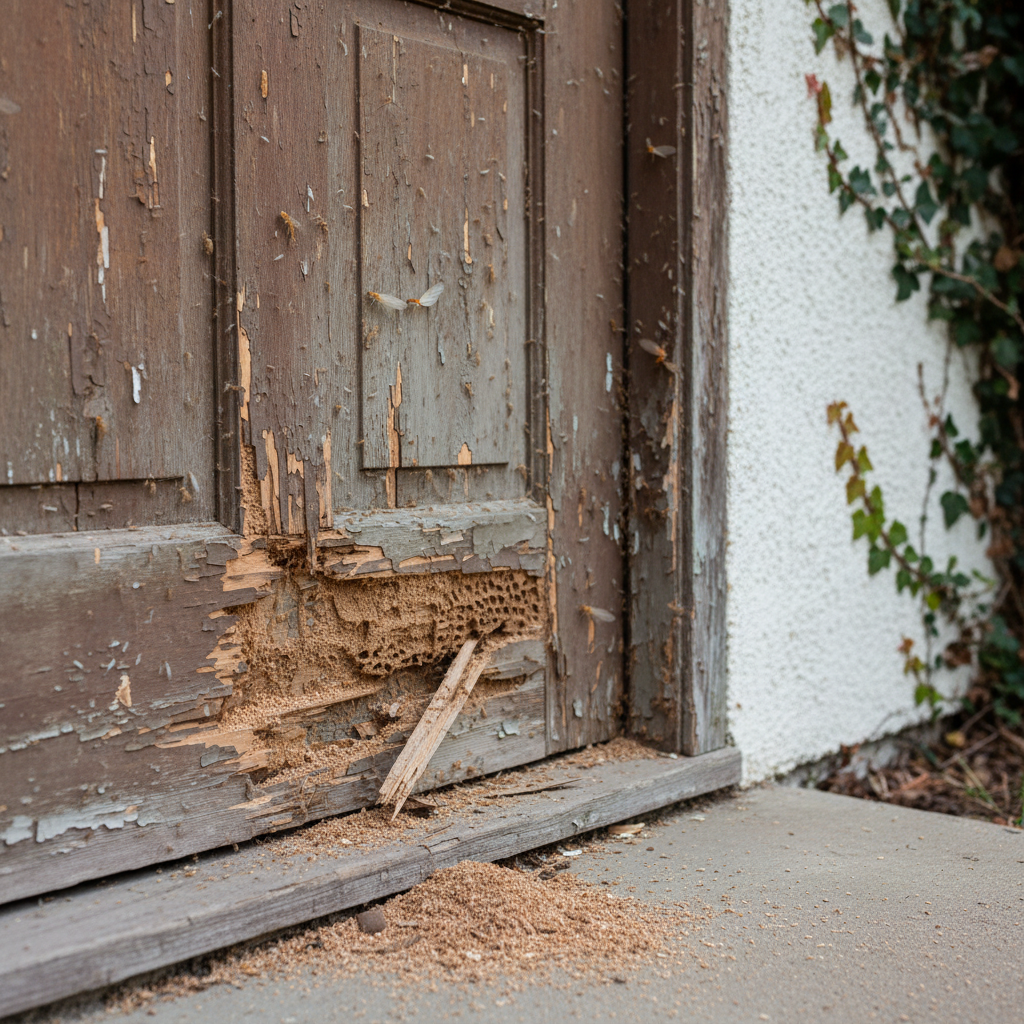
Termites damaging wood
By Admin / May 29, 2024

The Ultimate Guide to Preventing Termite Infestations

Termites can cause serious damage to your home. Learn how to spot the signs and prevent them...

Prevent Termites
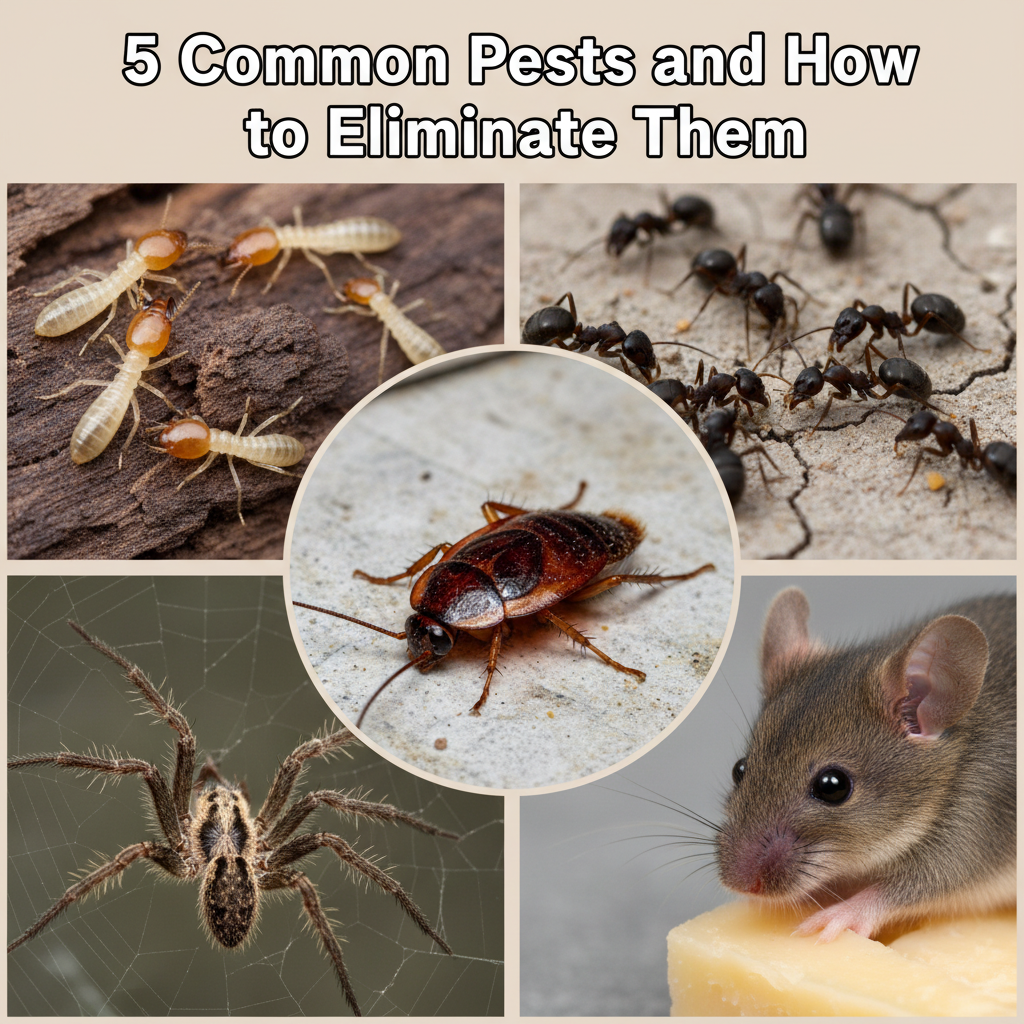
Common household pests
By Admin / May 22, 2024

5 Common Pests and How to Deal with Them

From ants to spiders, we cover the most common pests you might find in your home and how to get rid of them.

Deal with Common Pests
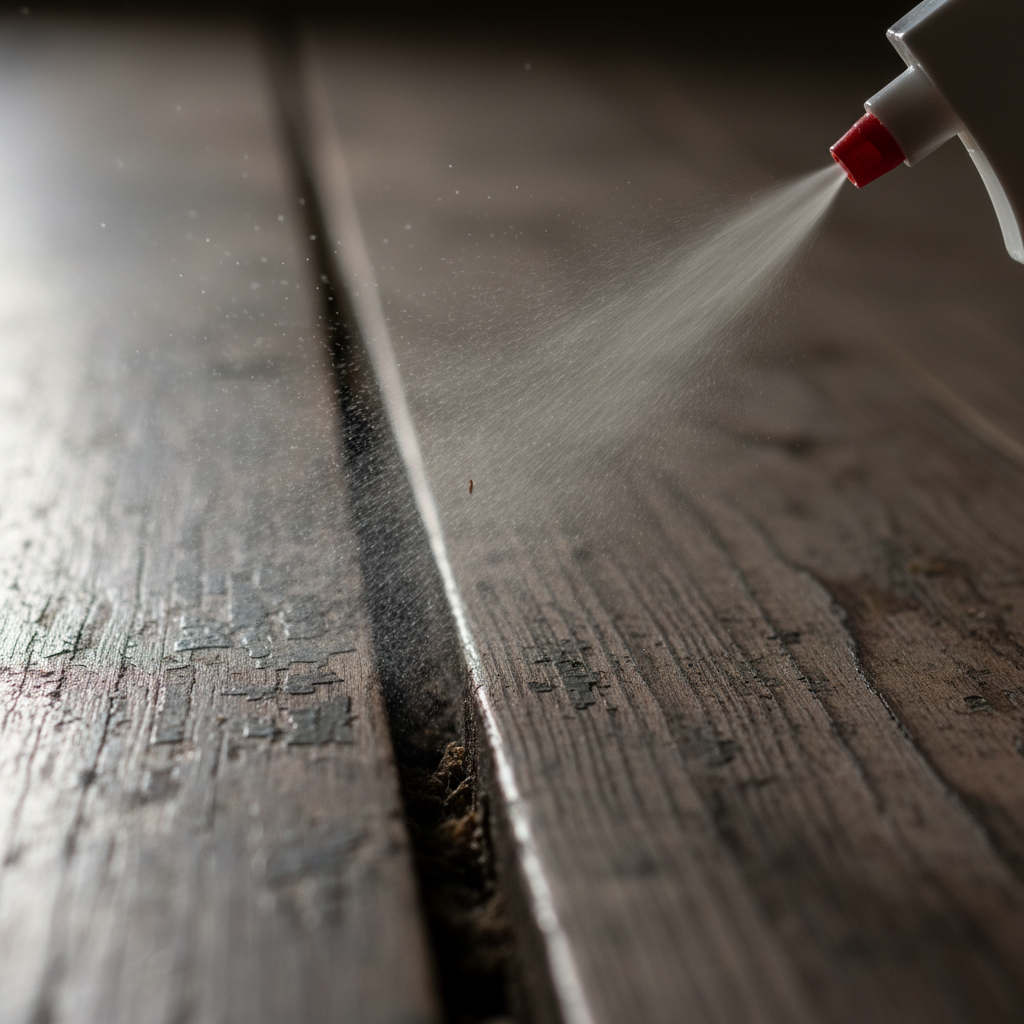
Pest control professional
By Admin / May 15, 2024

Why Professional Abbey Pest Control is Worth It

DIY methods can only go so far. Discover the benefits of hiring a professional pest control service.

Find out why?

WHY CHOOSE US

Your Trusted Partner in Pest Management

We combine our passion for pest control with advanced technology to deliver exceptional results. We are dedicated to providing you with a pest-free environment.

Experienced Technicians

Our team consists of certified and highly trained professionals with years of experience.

Eco-Friendly Solutions

We use safe, effective, and environmentally friendly products to protect your family and pets.

Customer Satisfaction

We are committed to providing the highest quality service and ensuring you are 100% satisfied.

24/7 Support

Pests don't rest, and neither do we. Our team is available for emergency services.

Pest control technician

CONTACT US

Get in Touch

Have a question or need to schedule a service? Fill out the form and we'll get back to you shortly.

Contact us

Our Office

32132 Elkford Dr, Abbotsford, BC V2T 5C3

+1-672-966-2300

contact@abbeypestcontrol.ca

Proudly CanadianMaple LeafOwned & Operated

Proudly Canadian

At Abbey Pest Control, we’re proud to be a 100% Canadian-owned and operated company. For years, we’ve been serving families and businesses across Lower Mainland: Vancouver, Surrey, Burnaby, Richmond, Coquitlam, Delta, New Westminster, Langley and in Fraser Valley: Abbotsford, Chilliwack, Mission, Maple Ridge, Hope, and Harrison Hot Springs with dependable, eco-friendly pest management solutions. Our roots in Canada mean we understand the unique pest challenges our communities face — from seasonal infestations to long-term prevention.

By choosing Abbey Pest Control, you’re supporting a local Canadian business that values honesty, professionalism, and sustainability. We’re committed to hiring and training local technicians, sourcing eco-friendly products, and delivering exceptional customer service you can trust. Whether it’s your home or your business, we’re here to protect what matters most — right here in Canada.

FAQS

Frequently Asked Questions

Find answers to common questions about our pest control services.

⁉️ Common Concerns

🏡 Before & After Treatment

💲 Pricing & Scheduling

🌱 Specialty Services

📞 Customer Support